Connecting Your Smart Home to a Voice Assistant
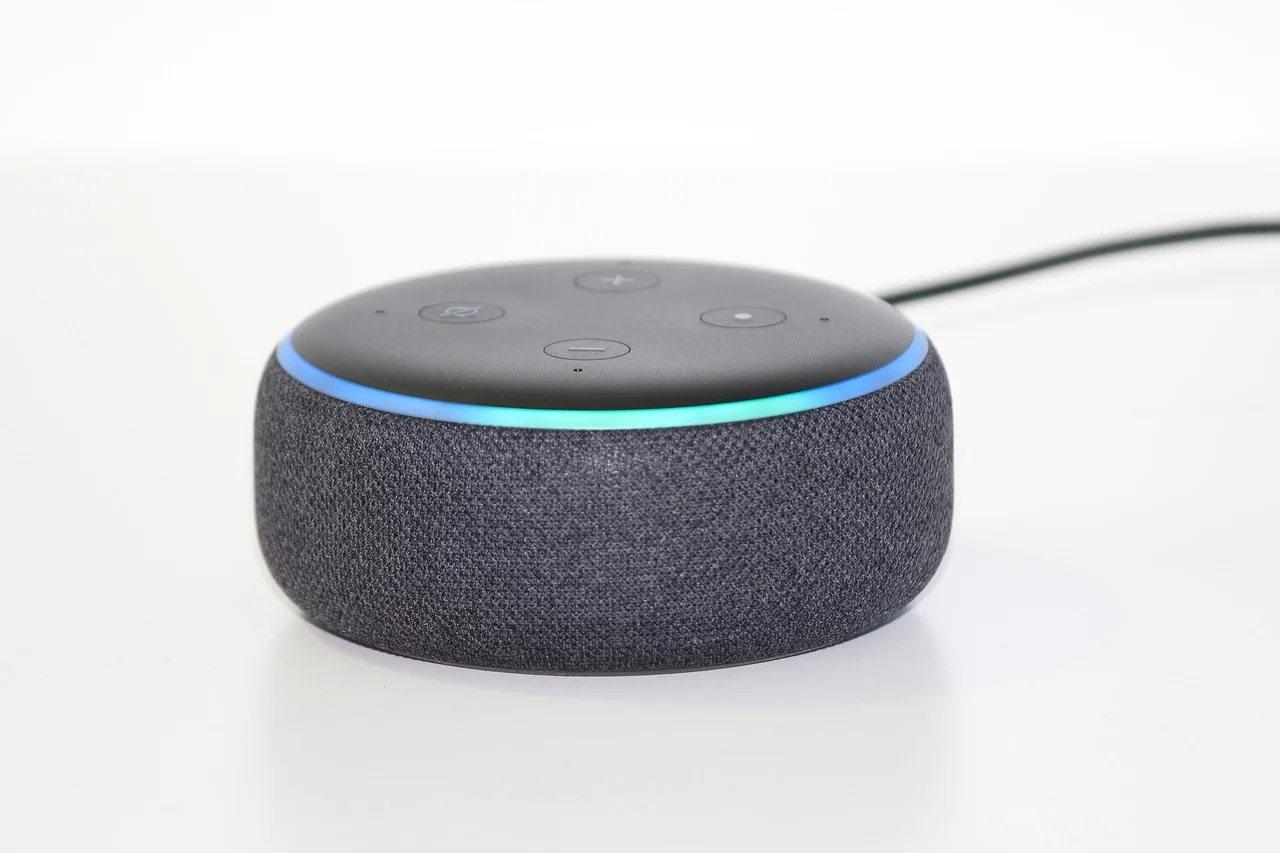
Asking your smart speaker for the day's water usage might feel like everyday domestic magic. Yet, having an assistant verbalize a water or electricity report conceals a highly complex data engineering process. While the user hears a seamless response, that answer actually relies on a robust local infrastructure capable of capturing, translating, filtering, and deduplicating the physical impulses from utility meters.
Key Takeaways
- A voice assistant relies on an underlying monitoring infrastructure to query a consumption database.
- Hardware capture requires specific sensors (like a camera or a proximity sensor) tailored to the meter's mechanics to convert the physical flow into a digital signal.
- Wireless packet processing is handled via decoding bridges (such as wmbusmeters to MQTT).
- A hierarchical structure within the central software is essential to prevent double-counting, which would skew the final spoken results.
Layer 1: The Vocal Illusion and Data Pipeline Reality
In Europe, a large proportion of homes feature smart automation equipment. The tech industry often portrays the smart speaker as the "brain" of the house, but this perception is technically inaccurate. Modern voice assistants rely on several technological building blocks, including text-to-speech, speech recognition, natural language processing (NLP), dialogue management, and intent resolution. They serve as brilliant translators, yet they remain fundamentally blind to the physical events occurring within the home.
Active vs. Passive Interventions
It is important to distinguish between an immediate action and an analytical request. Voice commands allow for real-time consumption adjustments: turning off a room's lights, setting the thermostat before leaving, lowering the blinds, or shutting off appliances. This action loop is relatively straightforward. Conversely, generating a report requires a structured historical log. Obtaining granular consumption data demands a monitoring system: either plug or circuit-level monitors, or a smart meter for a comprehensive, real-time overview.
The Three Architectural Tiers
To structure a reliable analytical system, home automation architecture must be envisioned in three layers:
- Capture layer: The physical hardware attached to the meters (sensors, probes).
- Aggregation layer: The local server (such as Home Assistant) that intercepts, stores, and prioritizes network packets.
- Interpretation layer: The NLP engine (the voice assistant) that taps into the aggregator's database to articulate its response.
Layer 2: Capturing Physical Utilities (Electricity and Water)
Data acquisition from a modern electrical panel, equipped with communicative terminals, is generally standardized. However, the hardware challenge intensifies significantly when it comes to water management, where the array of installed meters is highly fragmented and technologically disparate.
Modern Meters
Smart home integration requires adapting the sensor to the dial's mechanics. According to technical documentation, recent rotary disk water meters can be read using two methods: light sensors or proximity sensors. The choice of component directly dictates the temporal and quantitative resolution of the generated report.
The proximity sensor approach offers simple binary accounting: it detects magnetic field variations, and each rotation of the water meter's disk represents a specific volume consumed (often one liter, depending on the gauge). While functional, this level of granularity masks micro-leaks. Alternatively, the light sensor method utilizes an autocorrelation technique, offering a precision of 100 milliliters instead of the traditional one-liter increment.
Legacy Hardware
For setups incompatible with these sensors, a software-driven approach steps in where mechanics fall short. Older water meters (featuring only a dial pointer or a total index) can be read using an AI-on-the-edge device equipped with an ESP32 camera; the solution is effective but tedious to set up and remains firmly in the realm of DIY.
| Reading Method | Measured Precision | Smart Home Use Case | Limitation / Failure Point |
|---|---|---|---|
| Proximity sensor | Variable (often 1 liter) | Modern meter with a magnetic disk | Purely visual dial lacking a magnetic component |
| Light sensor (autocorrelation) | 100 milliliters | Modern meter with a reflective surface | Matte, scratched, or non-reflective dial |
| ESP32 Camera (visual recognition) | Varies by index | Older meter (pointer or pure digits) | Tedious assembly requiring good lighting |
| Radio decoding (Wireless M-Bus) | Variable | Remote smart meter | Encrypted broadcast or blocked radio access |
Layer 3: Intercepting Wireless Data (The MQTT and M-Bus Protocols)
Once the physical impulse is converted into a digital signal, it must travel across the local network to reach the central database. Since direct cable access to the meter is often impossible, the local engineering setup must intercept radio frames.
The M-Bus to MQTT Translation Bridge
Intercepting closed protocols requires specific tools. For meters read remotely via Wireless M-Bus, the wmbusmeters project captures, decodes, decrypts (provided you can get the cryptographic key from your network operator), and converts M-Bus packets to MQTT; multiple M-Bus receivers are supported, including RTL-SDR via the rtl-wmbus library. This MQTT stream acts as a lightweight asynchronous messaging system, which is easily digested by an aggregation platform.
Centralization and Network Requirements
Once the MQTT messages are received, the software platform takes over. The central hub allows users to track water consumption in their energy management dashboard. Even though water isn't strictly an energy source, it correlates closely with energy usage, much like gas.
Maintaining this continuous communication, however, imposes unavoidable infrastructure constraints. Although many smart home devices use alternative protocols like Zigbee or Thread, those relying on WiFi require a stable and fast local connection. A saturated local wireless network leads to dropped MQTT packets, creating data gaps in the charts that the voice assistant will be unable to fill during its spoken summary.
The Raw Data Trap: Why Configuring an "Upstream" Hierarchy is Vital
Querying a centralized database via an NLP engine guarantees nothing regarding the accuracy of the spoken figure if the application's logical architecture is flawed. This is where data engineering transcends simple connectivity.
The Risk of Double-Counting
Imagine a setup featuring a proximity sensor on the home's main water meter, alongside a smart sub-meter integrated into a modern washing machine. If the user asks, "What is my total consumption?", the voice assistant will query the aggregation platform and bluntly tally up all the registered water meters. The result: the liters used by the washing machine will be counted twice—once by its own sensor, and again when they pass through the main meter.
The Hierarchical Solution
To correct this analytical bias, the central platform must understand the physical topology of the plumbing network. You can create a meter hierarchy by declaring one device as the "upstream device" for another, which prevents double-counting between the main meter and individual appliance meters.
This rigorous structuring is the keystone of accurate voice reporting. Without it, the data becomes corrupted. Furthermore, it is vital to keep the limitations of your chosen ecosystems in mind. It is recommended to verify compatibility prior to purchase—specifically, ensuring that the central application supports hierarchical configuration before exposing it to a language assistant.
FAQ: Smart Home and Voice Architecture
Does an unstable WiFi network distort the voice assistant's feedback?
Yes. Transmitting data from sensors via MQTT requires smooth, uninterrupted local bandwidth. Network saturation leads to dropped packets, creating data gaps in the log that the assistant will ultimately read back as incomplete or inaccurate figures.What precision can I expect based on my water meter type?
It relies entirely on the reading technology. An autocorrelation light sensor can offer a precision of 100 milliliters on modern meters, while a classic proximity sensor logs volume based on an impulse value (often one liter, depending on the model). On older analog dials, camera-based visual recognition directly depends on the physical index, which is typically less precise.Why does my voice assistant report a higher water volume than the main meter?
This discrepancy often stems from a double-counting issue, which is common when sub-meters (such as the one on a washing machine) are tallied alongside the main meter. To fix this, you need to designate the main meter as the "upstream device" (parent device) for the sub-meter within your local aggregator's interface.Conclusion: Toward the Standardization of Energy APIs?
Orchestrating data from physical pipelines to a smart speaker currently demands a complex technological stack, navigating through optical signals, radio decryption, and hierarchical software structuring. The persistence of workarounds—like camera rigs or RTL-SDR receivers paired with decoding libraries—highlights the lack of native, end-to-end interoperable protocols in the housing market. Ultimately, the true smart home revolution won't just stem from more advanced language models, but from the democratization of open, standardized local APIs by meter manufacturers. Until then, smart home devices are largely designed to integrate with one another, offering viable intermediary solutions provided their software compatibility is verified beforehand.