Electric Vehicle Charging in Flanders (Belgium)
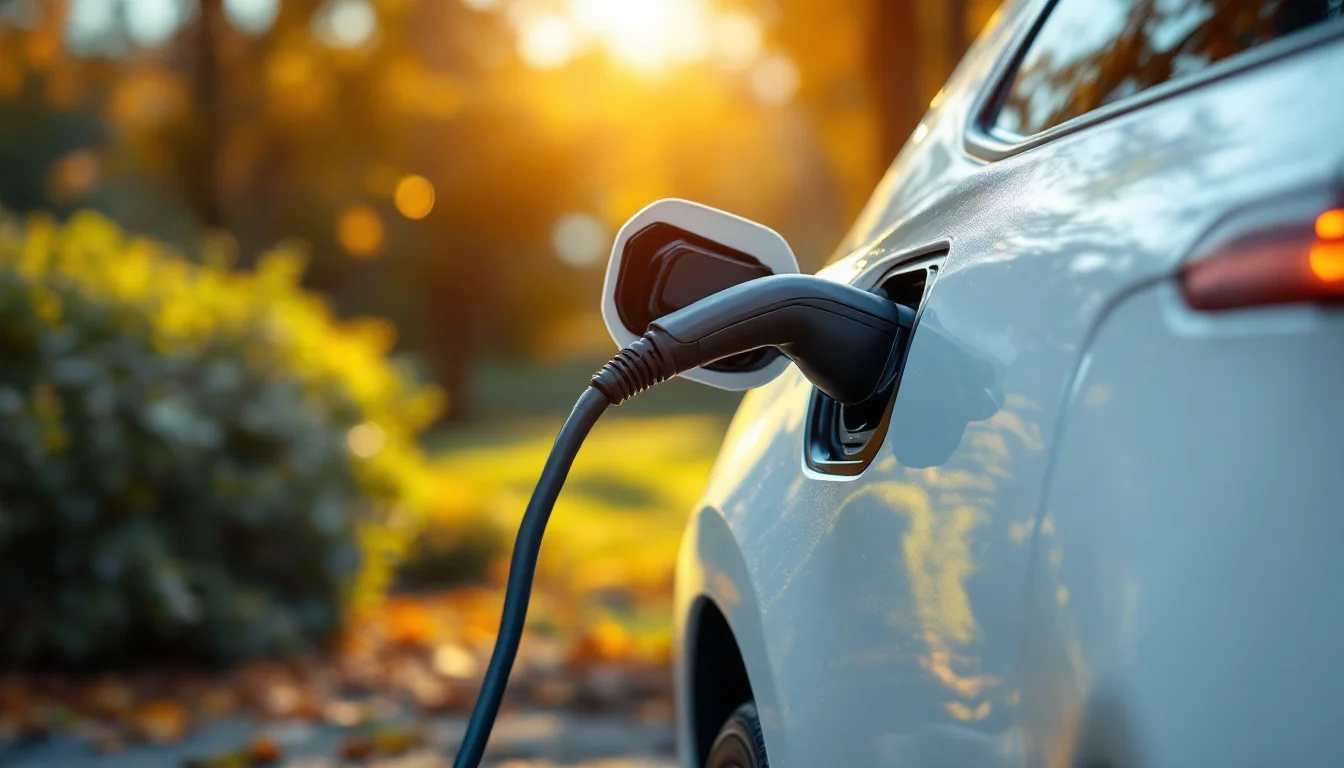
A clear transition is underway for future electric vehicle owners in Flanders (Belgium). While home charging was often seen as a simple convenience, it now falls under a stricter tariff framework. The end of tax exemptions for new registrations changes the baseline cost of zero-emission mobility, forcing households to rationalize their energy consumption.
In light of this evolution, the traditional approach of simply plugging in a car without considering the home's electrical flows is showing its limits. Using data from a smart meter, paired with an energy management system, can be highly relevant provided the household's driving profile and energy consumption levels justify it. The goal of this article is to analyze how these technologies interact with current pricing structures and to assess the extent to which the associated hardware investments are cost-effective.
Key takeaways
- Tax changes: The introduction of new fixed taxes for zero-emission vehicles registered in Flanders shifts the profitability calculation, making the optimization of electricity consumption all the more essential.
- Smoothing power peaks: The capacity tariff penalizes simultaneous power surges; an energy management system (EMS) uses meter data to adjust the car's charging rate and limit these extra costs.
- Maximizing solar energy: Scheduling charging sessions around midday improves self-consumption for vehicles parked at home during the day—a proportion that can be significantly increased by adding a home battery.
- Profitability limits: The complete hardware ecosystem (smart charger, EMS, battery) represents a substantial initial cost that must be carefully weighed against individual driving habits.
The new reality: Why data-driven optimization is essential
A redefined tax framework for zero-emission vehicles
The financial appeal of electric cars relies heavily on local taxation, which has recently seen some adjustments. New zero-emission vehicles registered in Flanders now pay an annual road tax of around 107 euros. Those registered earlier retain their tax-exempt status.
Alongside this annual fee, acquiring a clean vehicle now involves an entry cost, with a registration tax of approximately 61.50 euros. This new baseline of fixed costs means that the overall automotive budget no longer enjoys a total free pass, shifting the focus for savings onto operating costs—and therefore, the electricity bill.
The direct impact of the capacity tariff
Beyond registration, home electricity consumption now falls under a pricing structure that penalizes heavy network loads. The capacity tariff is determined by the average of monthly peaks (corresponding to maximum power demand) recorded by the smart meter.
This pricing mechanism fundamentally changes how a vehicle is charged. A charging session triggered at full power while the house is already consuming a lot of energy (e.g., oven, heat pump) generates a very high instantaneous power peak. Since the utility bill depends directly on the average of these peaks over the year, unmanaged charging mathematically leads to higher distribution costs. This is precisely why reading and leveraging smart meter data is becoming a necessity.
The EMS in practice: How your meter data controls your charger
The technical standards of residential charging
To understand how data comes into play, we first need to review the technical architecture of charging. For residential setups, the infrastructure generally uses a Type 2 socket, also known as "Mennekes," on the charger side, while the vehicle may be equipped with a Type 2 or CCS Combo 2 port. The effective charging power depends on the car's onboard charger (typically ranging from 7.4 kW to 11 kW, or even 22 kW) as well as the power delivered by the charging station or wall outlet.
Without a control system, plugging a vehicle with an 11 kW charger into a station capable of delivering that amount will instantly draw 11 kW from the electrical panel, adding to the home's ongoing consumption.
Digital regulation via the EMS
Active energy management steps in to mitigate this issue. An energy management system (EMS) monitors, controls, and optimizes consumption in real time. By connecting charging stations, solar panels, smart meters, and storage systems, it ensures efficient energy distribution and helps minimize costs.
Some devices offer load balancing across multiple chargers to prevent grid overload, as well as smart scheduling of charging sessions to take advantage of cheaper electricity rates. In practical terms, the EMS reads consumption data from the smart meter and reduces the power sent to the car if the home approaches a costly peak.
Integrating solar production
The EMS also plays an optimization role when it comes to photovoltaic panels. An average household self-consumes about 28% of its solar electricity. However, by running energy-intensive appliances (including vehicle chargers) around midday, when production is highest, this proportion can climb to 35%. The EMS's job is to automate this synchronization, triggering the charging station based on real-time sunlight data.
Comparison: Which infrastructure suits your needs?
Choosing the right home charging equipment directly determines your ability to control capacity tariff costs and maximize self-consumption. Here is an evaluation of the three main residential setups based on their technical characteristics:
| Infrastructure type | Charging speed | Impact on the capacity tariff | Solar energy utilization |
|---|---|---|---|
| Standard domestic outlet | Very slow (technically limited) | Natural smoothing due to low power, but no active peak management | Low (no synchronization with photovoltaic production) |
| Standard non-connected wallbox | Fast (depends on the car's onboard AC charger, often 11 kW) | High (immediate peak creation if charging coincides with other uses) | Limited (relies on manual triggering during the day) |
| Wallbox paired with an EMS | Adaptive (power varies based on electrical availability) | Low (load balancing automatically limits consumption spikes) | Optimized (automatic triggering aligned with panel production) |
Limits and profitability: Should you really invest in a battery?
The limitations of basic optimization
While controlling the charger with an EMS limits the impact of the capacity tariff, it doesn't solve every mismatch between production and consumption. The primary limitation of self-consumption lies in driving habits: if the EV is used daily for commuting and isn't plugged in at home during the day, syncing with solar panels becomes pointless. The goal of hitting 35% self-consumption by charging at noon is therefore unachievable on weekdays.
The physical storage option
To overcome this time constraint, storing daytime energy production for nighttime use is an option. With solar panels and a home battery, annual self-consumption can jump from about 28% to an average of nearly 68%, though these percentages depend heavily on system sizing, consumption profiles, and location. Integrating a battery alters the behavior of the EMS, which will store excess solar energy to feed into the car's battery in the evening, drastically reducing grid withdrawals.
This gain in autonomy, however, requires precise sizing. As a rule of thumb, experts recommend a home battery capacity of 1 to 1.5 kilowatt-hours (kWh) per kilowatt-peak (kWp) of solar panels.
Calculating the return on investment
Despite its technical performance, this ecosystem isn't immune to mixed financial results. Purchasing a smart charger, an EMS, and a properly sized home battery represents a very steep upfront cost. The profitability of this setup is highly sensitive to the number of kilometers driven annually.
For instance, the average weekly travel distance is around 250 km, meaning a single weekly charge might suffice depending on the vehicle's real-world range and driving conditions. For a driver covering such short distances, the monthly savings generated by 68% self-consumption and peak shaving might not offset the hardware costs before the equipment becomes obsolete.
On the other hand, for heavier usage, smart charge management can effectively optimize the energy bill, although installation generally requires an electrician and a connection to the smart meter's P1 port. In any case, it is important to remember that road taxes for new registrations remain unavoidable fixed costs that weigh on the overall automotive budget.
Frequently Asked Questions (FAQ)
Can you charge an electric vehicle on a standard domestic outlet?
Yes, it is technically possible to use a standard household outlet, but charging will be very slow. While this low power naturally smooths out demand on the home's electrical grid, it doesn't allow for any active management of consumption peaks, nor any smart synchronization with solar panel production.
Is an EMS useful even without solar panels?
Yes. Even without photovoltaic production, an EMS plays a key role in keeping electricity bills in check against the capacity tariff. It modulates the power sent to the car based on the home's overall demand, preventing the creation of a costly instant power surge if other energy-hungry appliances are running at the same time.
Is a smart meter required to use an EMS?
Technically, an energy management system relies on reading real-time consumption data. To adjust the charger's output, the EMS must communicate with the main meter, typically via the P1 port found on recent smart meters. Without this smart meter, fine-tuned automation and instantaneous responses to the home's load variations are technologically impossible.
Conclusion: Data-driven optimization
Ultimately, the end of the total free ride for new zero-emission vehicles in Flanders forces drivers to rethink how they charge. Upgrading a simple home outlet or wallbox with smart meter data fits perfectly into this cost-control mindset. From strictly managing the capacity tariff to maximizing solar self-consumption, home energy intelligence—when properly scaled to actual vehicle usage—stands out as a major economic lever for modern mobility.
--- This article is published for informational purposes only and does not constitute investment advice. Consult a certified financial advisor before making any investment decisions.